

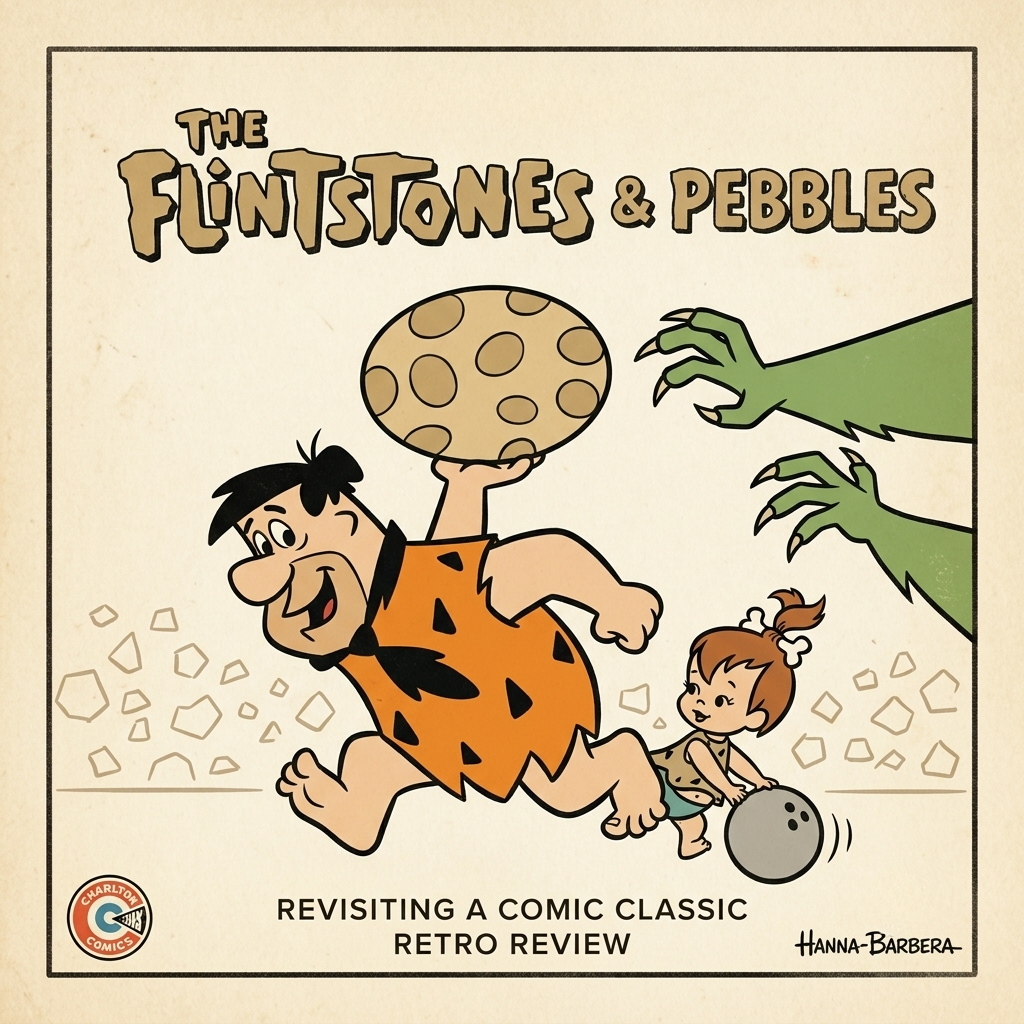
Yabba-Dabba-Charlton! When Fred's Scheming Went Full 1970s in The Flintstones #2

Welcome back, prehistoric pop-culture junkies, to another rock-solid edition of The Bedrock Chronicles!
Step into our time machine and set the dial for January 1971. The Beatles had just broken up, The Flip Wilson Show was ruling the airwaves, and over in the comic book spinner racks, a major seismic shift was happening. After a long, legendary run at Gold Key, Hanna-Barbera’s premier modern Stone-Age family packed up their trunk-hoses and moved to a brand-new publisher: Charlton Comics.
Today, we’re cracking open the bedrock of that transition era with a look at The Flintstones (and Pebbles) #2. For a mere 15 cents, kids in the winter of '71 were treated to a fascinating, slightly chaotic, and wonderfully vibrant new vision of Fred and the gang. Let’s see how Charlton handled the weight of the world's favorite caveman!
The Synopsis: High Stakes and Hair-Brained Schemes
Charlton didn't waste any time giving readers the classic anthology-style format they craved, packing this issue with two distinct prehistoric tales.
Story 1: "Let's Have a Ball" (16 Pages)
The main feature is a masterclass in classic Fred Flintstone over-ambition. The plot kicks off when Fred decides that the local Bedrock bowling league isn't prestigious enough—he wants to throw a grand, high-society gala to impress the upper crust of the dinosaur age. Naturally, Fred's wallet doesn't match his champagne wishes.
What follows is a frantic avalanche of errors as Fred drags a deeply reluctant Barney Rubble into a series of odd jobs to fund the party. Wilma and Betty spend most of the story delivering iconic, arms-crossed eye-rolls as Fred’s schemes inevitably blow up in his face, culminating in a chaotic ballroom disaster that proves you can take the caveman out of the quarry, but you can't take the quarry out of the caveman.
Story 2: "Fred's Fantastic Formula" (8 Pages)
The backup feature leans heavily into the sci-fi/wacky invention trope that Hanna-Barbera loved tinkering with in the late '60s and early '70s. Fred accidentally mixes a bizarre concoction in his garage that he believes is a revolutionary new substance.
Convinced he’s about to become a millionaire mogul, Fred tries to market his "Fantastic Formula" to Mr. Slate. Spoilers ahead: the formula is a catastrophic failure, Mr. Slate's blood pressure hits an all-time high, and Fred is left running for his life from a very angry boss.
The Critical Review: A New Look for the Stone Age
The Artwork: Loose, Lively, and Ray Dirgo Defined
If you grew up on the pristine, strictly "on-model" look of the Gold Key era, opening a Charlton Flintstones comic in 1971 was a bit of a trip. The art duties here are handled by the definitive Charlton Hanna-Barbera maestro, Ray Dirgo.
Dirgo’s style is much looser, more expressive, and decidedly more frantic than his predecessors. Instead of looking like animation cels frozen on a page, the characters feel incredibly dynamic.
-
The Good: The visual gags hit beautifully. Fred's facial expressions when a plan goes wrong are delightfully elastic, and the background dinosaurs look wonderfully goofy.
-
The Quirky: Some panels feel a bit rushed, with minimalist backgrounds that scream "70s budget comic production." But the sheer energy on the page more than makes up for the blank spaces.
The Writing: Sitcom Beats on a Printed Page
The writing captures the vocal cadences of Alan Reed (Fred) and Mel Blanc (Barney) flawlessly. You can practically hear Fred’s bombastic shouting and Barney’s nervous chuckle through the word balloons.
The stories feel exactly like lost episodes of the original television show, leaning into the domestic sitcom tropes that made the franchise a hit. If there's a critique to be made, it's that the resolution to "Fred's Fantastic Formula" is a bit abrupt—a common symptom of trying to cram a sitcom plot into a strict 8-page backup limit.

Collector’s Field Guide
Looking to hunt down this piece of Stone-Age history for your own comic vault? Here is what you need to know:
-
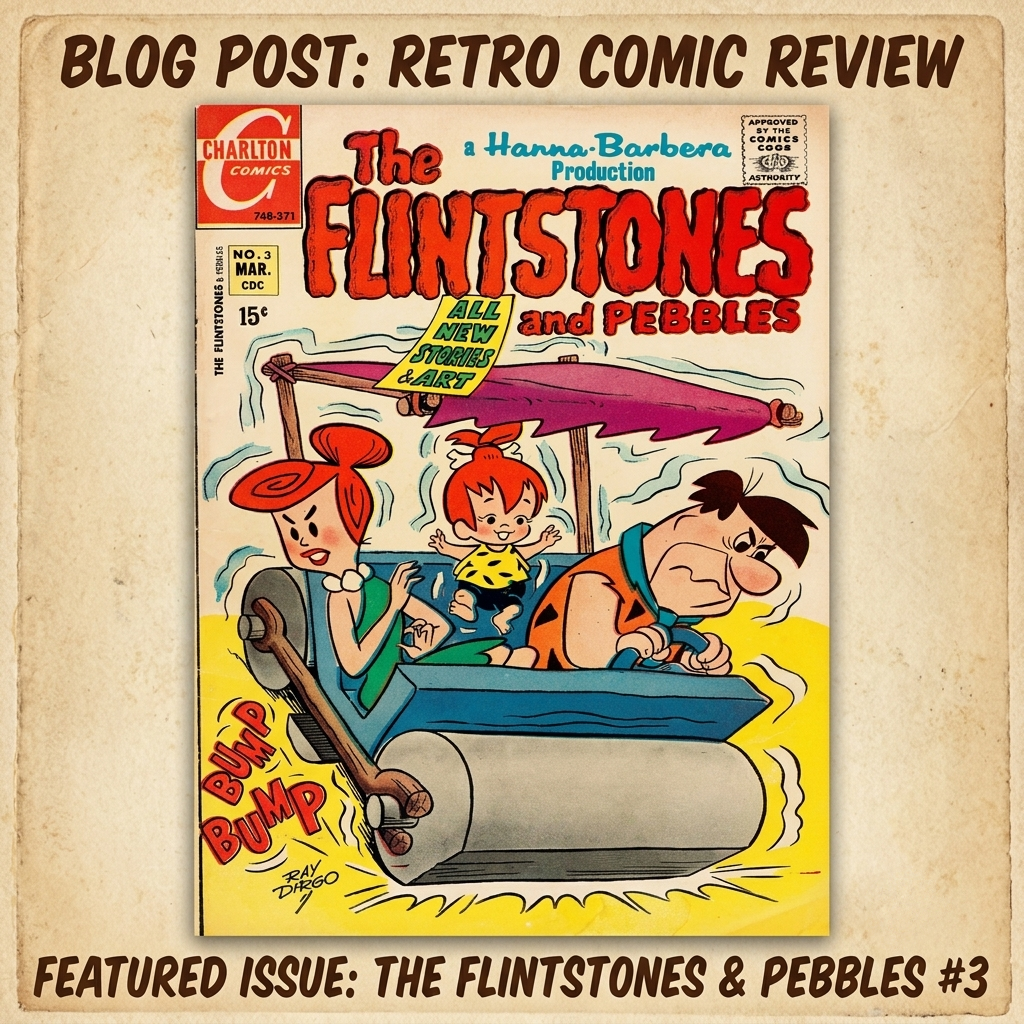
The Cover Branding Quirk: While the indicia strictly lists the title as The Flintstones, the cover prominently features giant branding that reads The Flintstones and Pebbles. Charlton did this for the first few issues to capitalize on the immense popularity of the televised Pebbles and Bamm-Bamm Show airing at the time.
-
The 15-Cent Era: This issue sits right at the tail end of the 15-cent comic book era. Later in 1971, prices across the industry would start creeping up to 20 cents, making this a sweet spot for budget vintage collecting.
-
Publisher Transition Context: Because this is only Charlton's second issue after taking over from Gold Key, the book represents a transitional phase where the creative team was still figuring out their unique spin on the Hanna-Barbera universe.
-
Paper Stock Warning: Charlton was notorious for using cheaper, lower-grade newsprint than Marvel or DC at the time. Finding a copy of this issue with bright white pages is incredibly rare; expect standard tanning or yellowing on the edges.
The Verdict & Rating
The Flintstones #2 is a delightfully energetic artifact of 1970s comic book history. While it might lack the polished elegance of the early 1960s Gold Key issues, it injects a dose of frantic, slapstick energy that perfectly mirrors the changing landscape of pop culture at the dawn of the seventies. It’s a fast, funny, and nostalgic read that deserves a spot on any Hanna-Barbera fan's shelf.
The Bedrock Chronicles Rating: 🦖 🦖 🦖 🦖 (4 out of 5 Brontosaurus Ribs!)


Leave a comment