

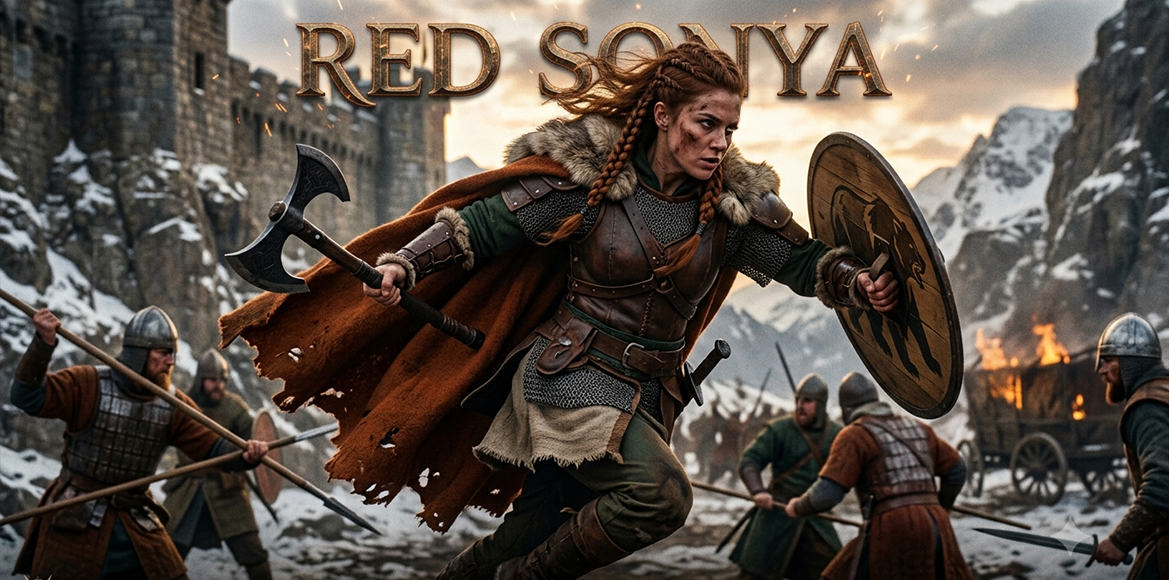
Beyond the Chainmail: The Surprising Secret History of Red Sonja
1. Introduction: The Legend You Only Think You Know
To the casual observer, Red Sonja is the quintessential relic of 1970s "bronze age" fantasy: a flame-haired warrior-woman standing atop a charnel heap of foes, armored in a scale-mail bikini that defies both physics and practicality. She is often dismissed as a mere "She-Devil" designed for the male gaze, a companion piece to Conan the Barbarian, whose utility is measured in sex appeal rather than steel.

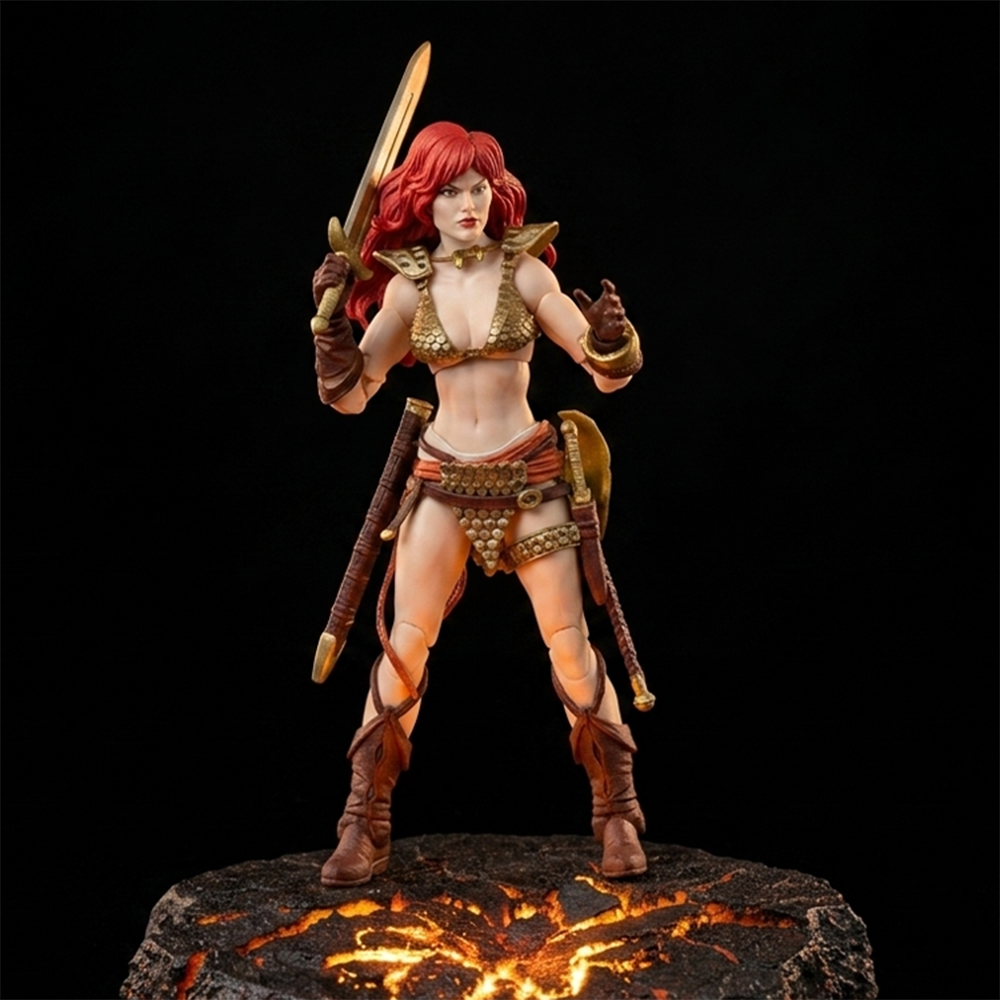
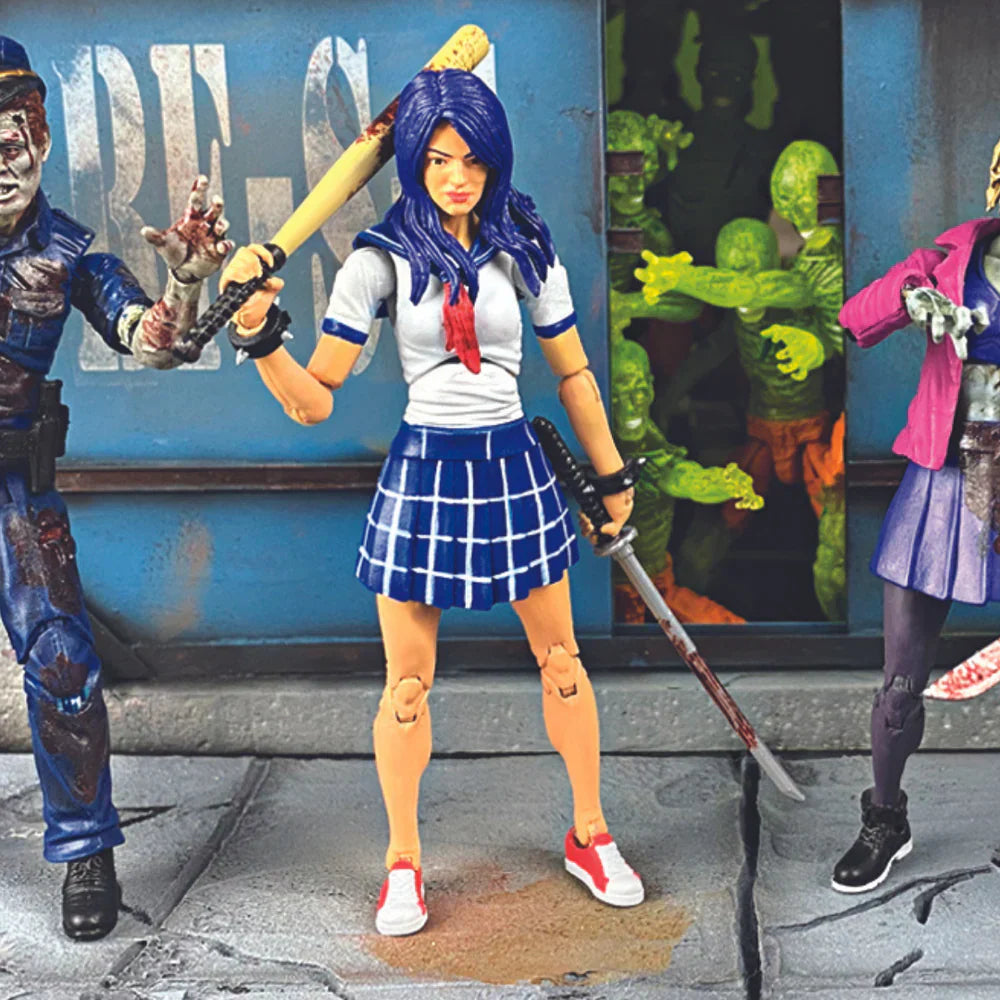
Red Sonja as a 1:12 Scale Action Figure from Boss Fight Studios
However, beneath the hypersexualized veneer lies the article’s central thesis: Red Sonja’s history is not purely pulp reinvention, but a layered transformation from historical figure to mythic icon. Before she was a wanderer of the prehistoric Hyborian kingdoms, she was a 16th-century mercenary fighting the expansion of the Ottoman Empire. To understand her, one must move beyond the "majestic Hyrkania" of comic lore and look toward the gunpowder-choked borderlands of the Polish-Lithuanian Commonwealth. As the Nemedian Chronicles suggest:
"Know also, O Prince, that in those self-same days that Conan the Cimmerian did stalk the Hyborian Kingdoms, one of the few swords worthy to cross with his was that of Red Sonja, warrior woman out of majestic Hyrkania."
The secret history of the She-Devil is a tale of two identities—one historical, one mythic—that eventually merged into a modern icon of autonomy, and that merger is the article’s central claim.
2. The Rogatino Roots: Sonja’s Hidden Polish Heritage
The character’s true genesis was not found in a prehistoric wasteland but in the pages of a 1934 historical-fiction short story by Robert E. Howard titled The Shadow of the Vulture. In this original writing, she was Red Sonya of Rogatino (spelled with a ‘Y’), a swashbuckling gunfighter in the year 1529.
The Historical Architecture of Red Sonya:
- Ethnic Origin: A Pole from the town of Rogatino (modern-day Ukraine), then part of the Polish-Lithuanian Commonwealth.
- The Sultana Connection: Sonya was the estranged sister of Roxelana (Khurrem the Joyous), the historical figure who rose from a captive slave to become the influential wife of Suleyman the Magnificent.
- The Mercenary Vocation: Unlike her sister, who wielded power through the Sultan’s harem, Sonya rejected the court. She wore mesh-mail, wielded a Hungarian saber, and lived by the "painless" logic of the mercenary.
When Roy Thomas adapted the character for Marvel in 1973, he introduced a layer of mythic architecture known as the "Favored" lore. In this version, Sonja was born to a group of red-haired, bronze-skinned people called the "Favored," created by the red goddess Scathach to slay the Drommach—flesh-eating man-beasts. Prophesied as a "pale-skinned destroyer," Sonja’s mother dyed her skin for a year to hide her identity before her parents were eventually slaughtered, leaving her a survivor of both supernatural and human cruelty.
This unification of Polish grit and mythic prophecy gave the "She-Devil" a depth that exceeded her eventual "bikini" iconography. That tension also shaped Sonya’s disdain for the Sultan’s world, which she expressed regarding her sister Roxelana:
"Because she's my sister, the slut! ... I wish my mark was Roxelana's—"
 Red Sonja’s journey didn't start in a mythical land, but at the heart of the 16th-century borderlands.
3. From 1529 to the Hyborian Age: The Great Time Jump
How did a 16th-century gunfighter become a contemporary of Conan? In Conan the Barbarian #23 (1973), Roy Thomas and artist Barry Windsor-Smith performed a "Great Time Jump," transposing Howard’s historical Sonya into the prehistoric Hyborian Age. To distinguish this new fantasy entity from her 16th-century predecessor, Thomas changed the "Y" to a "J," thereby creating Red Sonja and preserving the link between the two identities. This change was more than cosmetic; it was a rebirth.
This was more than a cosmetic shift; it was a rebirth, and it illustrates the article’s larger point. As noted by the CBSI historians, the Red Sonja who met Conan never technically existed before that issue—she was a new creature made from historical leftovers. However, this transition served a vital cultural purpose. In the 1970s, the "correspondence zones" of comic book letter columns began to frame Conan and Sonja as "adult literature." As analyzed in The Middle Spaces:
"Letter columns conditioned how readers read Conan, and so attempted to advance the transformation of public perception of comics from a kid's medium toward an adult medium... [it] included awareness of female representation."
By placing a woman with the "vitality and muscle" to cross blades with a Cimmerian into a central role, Marvel effectively used Sonja to bridge the gap between traditional pulp and a new, more mature era of sequential storytelling.
4. The Arsenal vs. The Bikini: An Iconographic Evolution
The "chainmail bikini" is so ubiquitous that it is often mistaken for Sonja’s original design. In truth, her attire was an accidental evolution from practical gear to fantasy trope, mirroring the character’s shift from historical figure to mythic icon.

The evolution of a warrior: from practical silk to iconic scale mail.
The transition occurred when Spanish artist Esteban Maroto submitted an "uncommissioned" illustration featuring a redesigned "metal bikini." Thomas liked the visual flair, and under artist Frank Thorne, it evolved into her permanent uniform. While critics noted the "hypersexualization" as a marketing gimmick, readers in the 1970s fought back in the letter columns, demanding a "capable-looking warrior woman" rather than "cheesecake." This tension between the character's visual presentation and her narrative competence remains the central irony of her brand.
5. A Grisly "Gift" for the Sultan: The True Ending of Her First Story
The most potent example of the character's defiance appears in the ending of The Shadow of the Vulture. In the wake of the 1529 siege, Sultan Suleyman the Magnificent was essentially gaslighting his own empire. He held a massive fete in the Stamboul Hippodrome, issuing a manifesto claiming a glorious victory despite losing 30,000 men and being repelled by "contemptible" walls.
Among the gold-knobbed pavilions and heaps of tribute, a package arrived via the Adrianople post. It contained the head of Mikhal Oglu—the Sultan’s chief raider known as "The Vulture"—preserved in herbs and spices. It was a direct puncture of the Sultan's imperial ego, sent by a woman he had tried to ignore. The note attached was a perfect example of defiance:
"To the Sultan Suleyman and his Wezir Ibrahim and to the hussy Roxelana, we who sign our names below send a gift in token of our immeasurable fondness and kind affection. — Sonya of Rogatino, and Gottfried von Kalmbach"
By sending this "gift" to her own sister and the world’s most powerful monarch, Sonya effectively assassinated Suleyman's precisely constructed victory narrative, supporting the same defiance that defines her across both histories.
6. The "Legal Divorce": Why Sonja and Conan Parted Ways
Today, Red Sonja is a standalone icon at Dynamite Entertainment, legally severed from the Marvel Universe. This "legal divorce" occurred when the rights to the character—originally held by Robert E. The Howard estate was moved to Red Sonja, LLC.

Red Sonya - safely in the public domain
There is a strong irony in this licensing split: while the "Red Sonja" trademark (the flame-haired woman in the bikini) is fiercely protected, the original version story, The Shadow of the Vulture, is actually in the public domain. So while no one else can publish a comic titled Red Sonja, the original "Red Sonya of Rogatino" belongs to history, illustrating the strange ways in which modern copyright law tethers—and sometimes strangles—literary legacies.
7. Modern Identity: Bisexuality and the Red Goddess
In the 21st century, writers like Gail Simone have reclaimed Sonja’s agency, officially confirming her bisexuality in 2016. This modernization opens a fascinating loophole in her mythic "vow." Traditionally, the goddess Scathach granted Sonja her strength on the condition that she would not lie with a man unless he defeated her in fair combat.
By confirming her attraction to women, modern narratives emphasize that Sonja’s autonomy is absolute. If a man must defeat her to earn her heart, but the vow says nothing of women, Sonja effectively retains total control over her personal life and sexuality. She is no longer a prize to be won by a "stronger" male protagonist; she is a woman whose heart and blade belong only to herself.
8. Conclusion: The Eternal She-Devil
Red Sonja has survived the 16th-century siege of Vienna, the sorcerous mists of Hyrkania, and the shifting tides of the comic book industry. Through every transformation, she is a character of contradictions: a historical gunfighter reborn as a mythic swordswoman, a survivor of trauma who became a goddess of war, and an icon of independence often dressed in the trappings of exploitation.
As she famously warned those who sought to buy her loyalty:
"May the devil bite me if I draw sword for any man while I have a penny left."
The history of Red Sonja proves the article’s central thesis: while a costume can be designed for a gaze, a character is defined by the legacy of her defiance.



















Leave a comment