


I. Introduction: The Woman Behind the Chainmail
For more than fifty years, when comic book collectors hear the name “Red Sonja,” they picture a bold, red-haired warrior in a shining scale-mail bikini, sword raised against mythical foes. She is famous in pop culture as the classic “She-Devil with a Sword,” standing with Conan the Cimmerian as a giant of high fantasy.
But for serious collectors, a vintage comic’s real value goes beyond its grade or rarity. Its history holds a secret that many casual fans overlook.
Before Red Sonja appeared in Marvel’s Hyborian Age or became a fantasy icon, she was not a barbarian. Her story started in 16th-century Europe, not a made-up world. She began as Red Sonya of Rogatino, a Polish-Ukrainian warrior who fought with guns and sabers during the Siege of Vienna in 1529.
To understand why her earliest comic appearances, like her debut in Conan the Barbarian #23, are so important, you need to see how much the character changed. Red Sonja started as a historical-fiction heroine created by Robert E. Howard in 1934 and became a comic book legend. This transformation makes her early issues especially valuable to collectors.
II. The Historical Background: Red Sonya of Rogatino
To get to the heart of the character, collectors should look beyond the fictional land of Cimmeria and focus on Eastern Europe. Robert E. Howard first created her as Red Sonya, spelled with a "y," in his 1934 story "The Shadow of the Vulture."
The Polish-Ukrainian Frontier
Howard’s Sonya came from Rogatino, now Rohatyn in Ukraine, a town within the Polish-Lithuanian region during the 16th century. Instead of battling sorcerers, she was a tough frontier fighter caught in the real conflicts between European kingdoms and the growing Ottoman Empire.
The Roxelana Connection
Sonya’s fierce spirit came from a personal tragedy, not a fantasy curse. In Howard’s story, she is the sister of Roxelana (Hurrem Sultan), a real person taken from Rogatino by Ottoman slavers. While Roxelana became the wife of Sultan Suleiman the Magnificent, Sonya chose to fight. Driven by anger at the empire that tore her family apart, she defended Europe during the Siege of Vienna in 1529.
For collectors of high-end figures and statues, Red Sonya of Rogatino is almost impossible to find. Her lack of physical merchandise highlights how often her historical roots are ignored, making her earliest comic appearances even more important. Most collectibles focus on her later fantasy look, while figures of the original 16th-century warrior are rare. Because toy companies overlook her origins, serious fans must turn to vintage comics to own a piece of her true history. This rarity adds to the value and appeal of her earliest issues.
III. The Arsenal of Rogatino: Reality vs. Fantasy
Collectors usually picture Red Sonja as a sword-fighting hero, but the original 16th-century Sonja was a very different kind of warrior. She adapted to the harsh and changing world of early modern warfare.

Frontier Weaponry: Sabers and Pistols
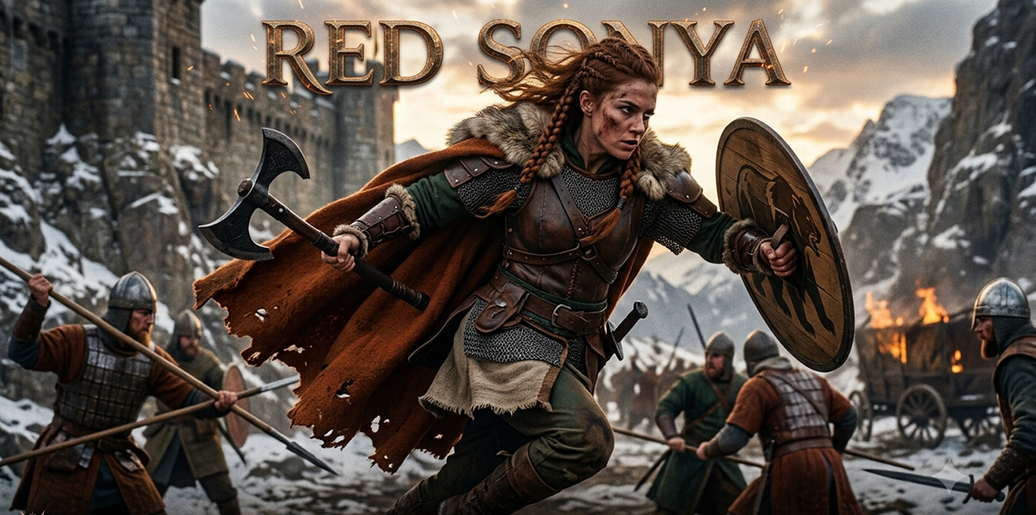
In Howard’s original story, Sonya did not use a big broadsword. On the Eastern European frontier, her main weapon was a long Hungarian saber, which she used with incredible speed. In the story, people describe her swordplay as a fast "blur of white fire."
Modern comic fans might be surprised that Sonya also used firearms. As a 16th-century soldier, she carried flintlock pistols and a dagger in her green silk sash. She was an excellent shot, once using a pistol to save her ally, the German knight Gottfried von Kalmbach, by shooting an Algerian corsair.
Gunnery and Tactics: The Maid of the Cannon
Sonya was skilled in more than just close combat; she was also an expert with heavy artillery. During the Siege of Vienna, when the Ottomans tried to break through, Sonya took charge on the walls. She aimed and fired a huge cannon herself, hitting and destroying an enemy gun crew with a cannonball "bigger than a man's head."
Why This Matters to Collectors
This sharp difference between history and fantasy is why early comic issues are so important to collectors. They capture the moment when the character changed, which adds to their value. It also led to new creative challenges.
When Roy Thomas and Barry Windsor-Smith adapted "The Shadow of the Vulture" for Marvel’s Conan the Barbarian #23 in 1973, they faced a big creative challenge. To make her fit with Conan, they changed her name from Sonya to Sonja, moved her into the Hyborian Age, and took away her firearms to match the sword-and-sorcery world.
Owning Conan the Barbarian #23 is not just about having a superhero debut. This issue is where 16th-century history and Polish-Ukrainian roots were turned into high fantasy. Collectors should see it as the key moment when two very different genres came together.
IV. The Iconography: From Mail Shirts to the Bikini
Red Sonja’s weapons changed to fit high fantasy, and her wardrobe changed just as much. For collectors, knowing the history behind her different looks is important, since certain outfits mark big changes in her story and affect the value of her comics.
Original Practicality: The European Man-at-Arms
When Barry Windsor-Smith first brought Robert E. Howard’s heroine to life in Conan the Barbarian #23, he stayed relatively close to the practical descriptions found in "The Shadow of the Vulture."
Her first appearance showed her as a practical, early-modern mercenary. She wore a long-sleeved chainmail shirt tucked into a green silk sash, with red shorts and tall leather boots. This outfit was made for fighting in Vienna, focusing on movement and protection rather than appearance.
The Maroto Redesign: Birth of the Metal Bikini
The look that would define Red Sonja did not start in a Marvel comic. In the early 1970s, Spanish artist Esteban Maroto created an unofficial drawing of her, giving her a new silver scale-mail bikini.
Marvel editor Roy Thomas saw Maroto’s drawing and immediately saw its appeal. The design first appeared in Savage Sword of Conan #1 in 1974. Although not practical for real combat, the look was eye-catching and fit the bold style of 1970s fantasy art.
To explain the lack of protection, later writers gave an in-story reason: Sonja wore the minimal armor on purpose, believing it would distract male opponents just long enough for her to strike first.
The Frank Thorne Era: A Trademark is Forged
While Maroto created the bikini look, artist Frank Thorne made it famous. In the late 1970s, Thorne’s lively artwork made the scale-mail armor stand out. He captured her wild energy and turned the look into her lasting trademark. Thorne’s work helped make Red Sonja a favorite at fantasy conventions and an early cosplay icon.
Why This Matters to Collectors
For collectors, these changes in her look mark important milestones in her comics and help show which versions are most valuable.
- The "Conservative" Bronze Age Era: Issues where she wears the full chainmail shirt represent her closest tie to Robert E. Howard’s historical fiction.
- The Silver Bikini Era: Key issues featuring the Maroto and Thorne aesthetic represent the exact moment Red Sonja broke away from historical fiction entirely to become an independent pop-culture phenomenon.
V. Key Issues for the Discerning Collector
When collecting Red Sonja comics, value comes not just from rarity or popularity, but from the key moments that changed her character. The following issues highlight the milestones that took her from her 16th-century roots to a fantasy icon.
1. Conan the Barbarian #23 (1973)

- The Milestone: First appearance of Red Sonja; official adaptation of Robert E. Howard’s "The Shadow of the Vulture".
- Why It’s Essential: This issue started the whole franchise. Written by Roy Thomas and drawn by Barry Windsor-Smith, it connects history and fantasy. Collectors value it for showing her original, practical outfit before the fantasy redesign. It is a must-have for any serious Red Sonja collection.
2. Conan the Barbarian #24 (1973)
- The Milestone: First cover appearance and first full Red Sonja story.
- Why It’s Essential: While issue #23 introduced her, #24 made Red Sonja a lasting part of comic history. Barry Windsor-Smith’s cover, showing Sonja with her sword next to Conan, is one of the most famous Bronze Age covers. It showed Marvel that she could stand out on her own.
3. Savage Sword of Conan #1 (1974)

- The Milestone: Historical debut of the silver scale-mail bikini; her first solo adventure.
- Why It’s Essential: This larger magazine issue marks a big change in her look. It features the first official version of Maroto’s scale-mail bikini design. Since Savage Sword was published outside the Comics Code Authority, it allowed for more mature stories and moved Sonja away from her historical roots into adult high fantasy.
4. Marvel Feature v2 #1 (1975)
- The Milestone: First headlining solo appearance in a standard-format comic book.
- This issue showed that Red Sonja could succeed without Conan. It started a short but important 7-issue run that tested her as a solo character. It also introduced Frank Thorne’s art, which set her look for the next forty years.
5. Red Sonja #1 (1977)
- The Milestone: Launch of her first ongoing, self-titled solo series.
- Why It’s Essential: With a famous cover by Frank Thorne, this book is a top prize for Bronze Age fans. It marks the height of 1970s sword-and-sorcery comics. Thorne’s work made Red Sonja a pop culture icon and an early cosplay favorite at conventions.
6. Red Sonja #1 (2013)
- The Milestone: The Gail Simone modern reboot.
- Why It’s Essential: For today’s collectors, this is the most important recent issue. Writer Gail Simone gave the character new life for modern readers. She removed the controversial parts of Sonja’s 1970s origin and replaced them with a story about survival, toughness, and gladiator battles. Simone brought back the fierce, independent spirit of Howard’s original character and gave Sonja real control over her story.
|
Issue
|
Year
|
Key Significance
|
Artistic Era
|
|
Conan the Barbarian #23
|
1973 | First Appearance / Howard Adaptation | Barry Windsor-Smith (Chainmail Shirt) |
|
Conan the Barbarian #24
|
1973 | First Cover Appearance | Barry Windsor-Smith |
|
Savage Sword of Conan #1
|
1974 | Debut of the Scale-Mail Bikini | Esteban Maroto Redesign |
|
Marvel Feature v2 #1
|
1975 | First Solo Headline Book | Frank Thorne Era Begins |
|
Red Sonja #1
|
1977 | First Ongoing Solo Series | Definitive Frank Thorne |
|
Red Sonja #1
|
2013 |
The Modern Collectible Landscape: Statues and Figures
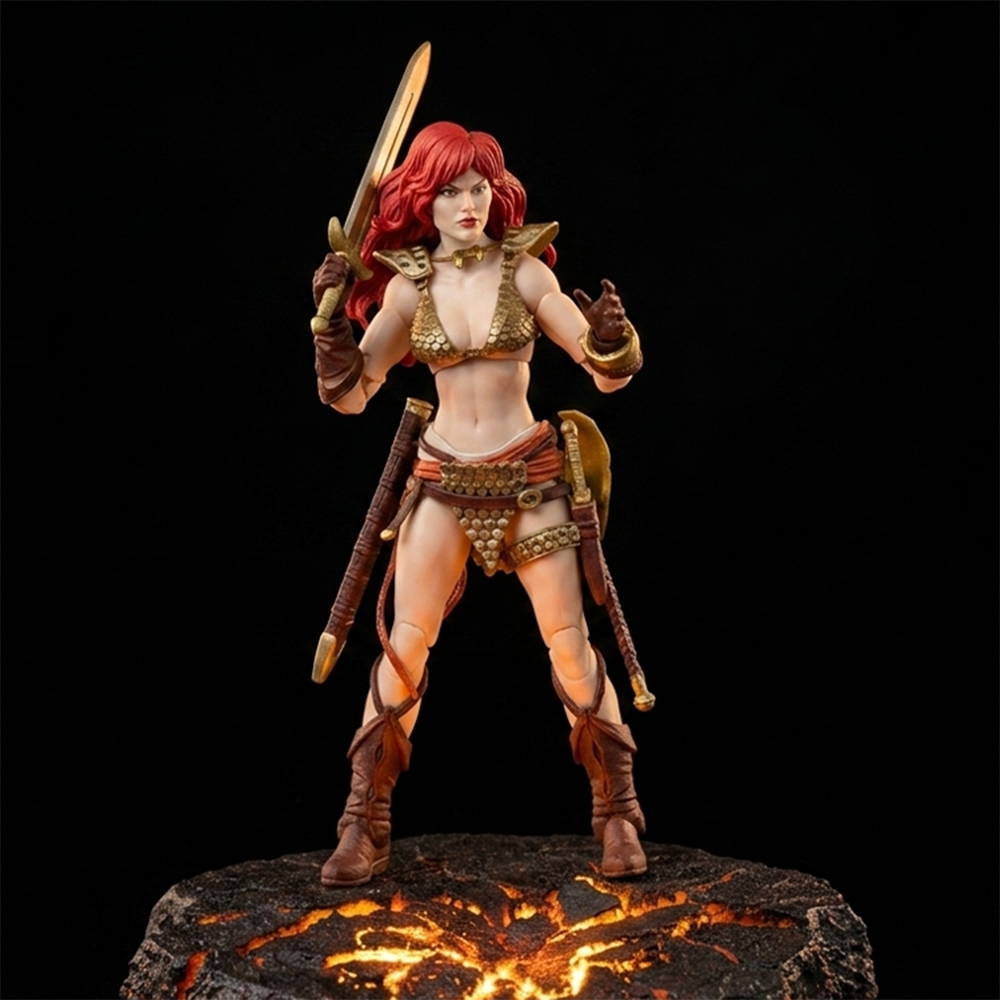
Vintage comics are still the best way to connect with her 16th-century roots, but today’s collectibles market has many premium options for fans who want to display her high-fantasy side. If you want to add more than comics to your collection, here are four popular releases available now:
-
Red Sonja Hero H.A.C.K.S. 1:18 Scale Action Figure by Boss Fight Studio – A highly articulated, historically styled block-figure crossover that perfectly captures her classic pulp-fantasy aesthetic in a dynamic, poseable format.

-
Steampunk Legend Red Sonja – A brilliant alternative-universe take on the character, blending her trademark fiery warrior spirit with intricate, brass-and-gear Victorian sci-fi aesthetics.

-
Red Sonja 50th Anniversary Epic Figure – A massive milestone piece celebrating five decades of the character, immortalizing her definitive, scale-mail bikini look in stunning, museum-quality detail.

-
Red Sonja Gold and Red Limited Edition Figure – A premium variant statue designed for high-end collectors, utilizing striking metallic paint finishes to make her signature armor and crimson hair pop under display lights.

VI. The Evolution of a Feminist Icon
Red Sonja’s lasting impact comes not just from her bold look, but from her role as a trailblazing female hero in a mostly male genre. Over the past fifty years, her story and independence have changed with the times, but one key trait has always remained.
Divine Intervention vs. Earned Grit
In the original 1970s Marvel comics, Sonja’s skills came from a supernatural story. After her family was attacked, the goddess Scathach gave her great fighting abilities, but only if she promised never to be with a man unless he beat her in fair combat. This made her a top warrior, but also linked her power to outside rules.
When Gail Simone rebooted the character in 2013, she changed this completely. Simone removed the goddess and the vow, making Sonja a self-made survivor. Now, her skills come from hard training, survival, and smart tactics, not from magic. This gave Sonja full control over her own life and choices.
The "Hot-Blooded" Legend: Preserving the Core
Even with all these changes, today’s Red Sonja still has the same spirit as Robert E. Howard’s original 1934 character.
In "The Shadow of the Vulture," Red Sonya of Rogatino was known for her wild, independent nature. She was a passionate mercenary who could out-drink soldiers, out-swear knights, and ignored the gender rules of her time.
When Marvel turned her into a fantasy character and modern writers like Simone updated her, they kept this same personality. Red Sonja is still known for her quick temper, strong will, and loyalty. She is not a perfect or passive princess, but a tough survivor who wins through hard work and cleverness.
From a collector’s point of view, this steady personality is why Red Sonja has so many loyal fans. Whether you collect her first appearance from 1973 or her modern stories, you are following a character who always keeps her independent spirit. She is one of the first and strongest examples of breaking the "damsel in distress" stereotype in comics.
VII. Conclusion: An Enduring Legacy
Red Sonja’s journey from the battlefields of 16th-century Rohatyn to the fantasy world of the Hyborian Age shows why she is the classic fierce female warrior. By turning her from a real historical fighter into a fantasy hero, Marvel created more than just a character—they started a new trend in pop culture.
For today’s fans, collecting Red Sonja is about more than price or grading. The real reward is owning a piece of history that blends real events with fantasy. Her early comics show where Eastern European history meets high fantasy. She is a survivor, a pioneer, and a legend whose story still inspires collectors.
What’s Next For Your Collection?
Whether you are searching for Conan the Barbarian #23 or collecting modern statues like the Red Sonja 50th Anniversary Epic Statue, you are helping to keep a legacy alive that stretches across centuries.















Leave a comment