

What Exactly is a Monchhichi?
Discovering the Story Behind the World’s Most Lovable Doll
Emotional Design and Enduring Appeal
When someone asks “What exactly is a Monchhichi?” they’re really asking about one of the most successful examples of emotional design in toy history. These aren’t just dolls – they’re carefully crafted companions that have been bringing comfort and joy to people around the world since their creation in 1974. To truly understand what makes a Monchhichi special, we need to look beyond the surface and explore the thoughtful design, cultural significance, and enduring appeal that has kept these dolls relevant for nearly five decades.
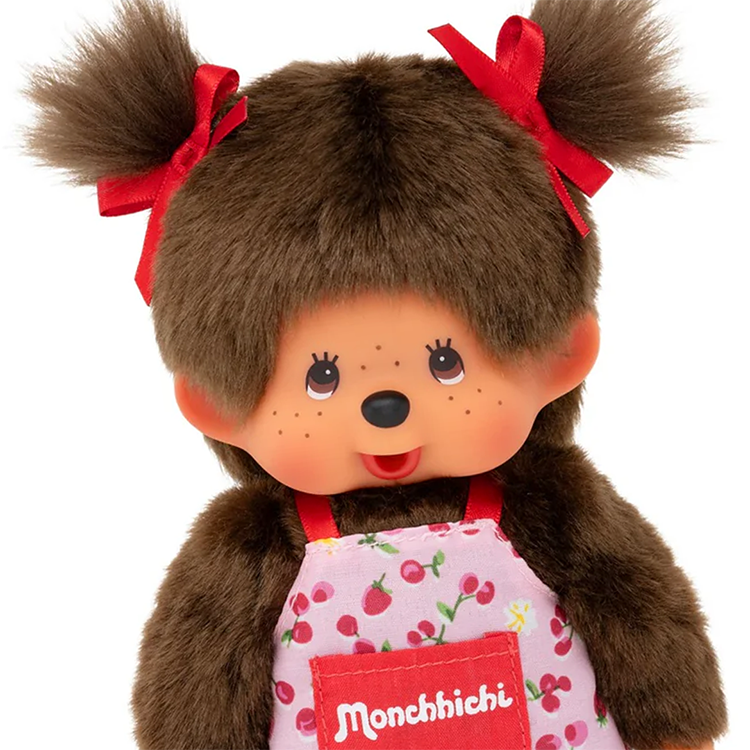
At its core, a Monchhichi is a plush doll that represents a baby monkey, but this simple description barely scratches the surface of what makes these toys so remarkable. The genius of Monchhichi lies in its ability to trigger deep emotional responses through carefully designed visual and tactile elements that appeal to our most basic nurturing instincts.
The Visionary Creation of Koichi Sekiguchi
The story of Monchhichi begins with a man who understood that the best toys aren’t just entertaining – they’re emotionally meaningful. Koichi Sekiguchi, founder of the Sekiguchi Corporation, spent considerable time in the early 1970s studying what made certain toys more appealing than others. His research led him to a fascinating conclusion: the most beloved toys were those that somehow reminded people of babies or young animals, triggering protective and nurturing instincts.
Sekiguchi’s breakthrough came when he decided to combine the appeal of human babies with the playful charm of young monkeys. This wasn’t a random choice – monkeys share many facial features with human infants, including large eyes relative to face size, rounded cheeks, and expressive features. By emphasizing these similarities while adding distinctly monkey-like elements such as fur and a tail, Sekiguchi created something entirely new in the toy world.
The development process took nearly two years, with Sekiguchi and his team testing different materials, proportions, and facial expressions. The final design that emerged in 1974 represented a perfect balance of cute and comforting, playful and peaceful. Most importantly, it possessed that indefinable quality that made people want to pick it up and hold it close.
Anatomical Design: Every Detail Serves a Purpose
Understanding what makes a Monchhichi requires examining its construction with the eye of both an artist and a psychologist. Every element of the doll’s design serves a specific purpose in creating emotional connection and ensuring durability.
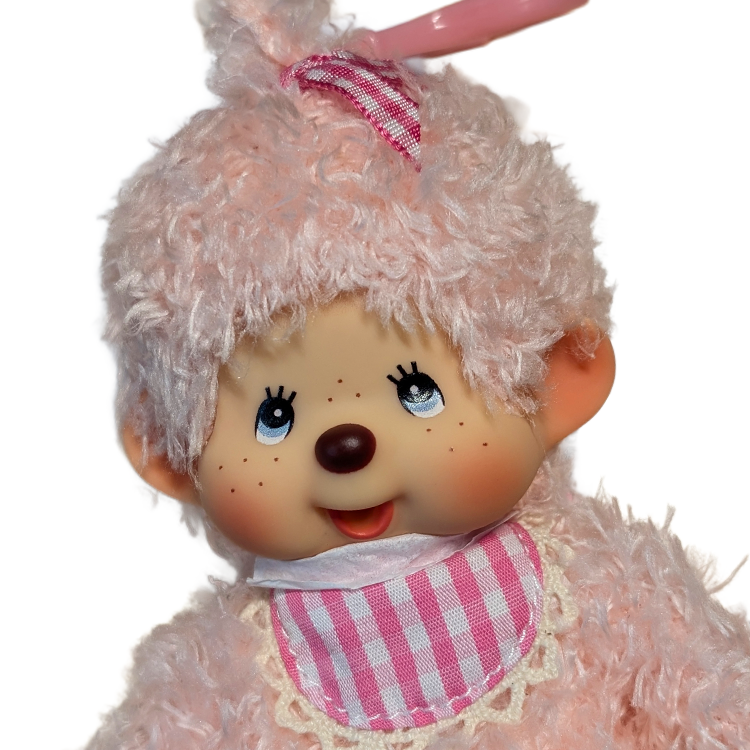
The head is the focal point of any Monchhichi, and for good reason. Crafted from high-quality plastic, the face features proportions that psychologists call “baby schema” – characteristics that humans are evolutionarily programmed to find appealing. The eyes are approximately 30% larger than they would be on a realistic monkey, creating an immediate sense of innocence and vulnerability. The mouth is small and slightly open, suggesting both surprise and contentment.
The body proportions follow similar principles. The torso is slightly oversized compared to the limbs, mimicking the proportions of human infants and young animals. This design choice makes the doll feel substantial when held while maintaining an overall sense of delicacy and preciousness.
The famous thumb-sucking pose isn’t just a cute affectation – it’s a carefully calculated design element that serves multiple psychological functions. For children, it normalizes thumb-sucking behavior and provides comfort to those who engage in this natural self-soothing activity. For adults, it triggers protective instincts and memories of childhood innocence. The positioning of the hand also creates a natural focal point that draws the eye and creates a sense of movement even when the doll is stationary.
Material Science and Craftsmanship
The tactile experience of a Monchhichi is just as important as its visual appeal. The plush material used for the body is selected not just for softness, but for its ability to maintain texture and appearance over time. Unlike many toys that become matted or discolored with use, quality Monchhichi dolls are designed to age gracefully, developing a pleasant patina that adds to their charm rather than detracting from it.
The plastic components – primarily the face and hands – are manufactured using techniques that ensure color stability and resistance to wear. The paint used for facial features is specially formulated to resist fading and chipping, which is why vintage Monchhichi dolls often retain their original appearance decades after production.
The internal structure of a Monchhichi is more complex than it might appear. Rather than simple stuffing, these dolls contain carefully positioned filling that maintains the proper proportions and allows for natural positioning of the limbs. This internal engineering is what allows a Monchhichi to maintain its characteristic pose while remaining soft and huggable.
Global Cultural Adaptation and Regional Variations
The international expansion of Monchhichi in the late 1970s and early 1980s provides a fascinating case study in cultural adaptation. While the core design remained consistent, regional preferences influenced everything from clothing styles to marketing approaches.
In European markets, Monchhichi dolls were often positioned as collectible items, leading to the creation of elaborate accessories and themed collections. French consumers, in particular, embraced the dolls as fashion items, resulting in miniature clothing lines that rivaled those of fashion dolls. German markets showed preference for seasonal and holiday-themed editions, leading to the creation of Christmas, Easter, and other celebratory Monchhichi variants.
American consumers gravitated toward the comfort and emotional support aspects of Monchhichi dolls. This preference influenced the development of larger sizes and softer materials specifically for the North American market. The success in America also led to the creation of animated content and media tie-ins that helped establish Monchhichi as a recognizable character brand rather than just a toy line.
The Psychology of Collecting and Emotional Attachment
Modern research into the psychology of collecting helps explain why Monchhichi dolls have maintained such a devoted following. These toys trigger what psychologists call “cute aggression” – the overwhelming urge to squeeze or hold something that appears particularly adorable. This response is thought to be an evolutionary adaptation that helps ensure the care and protection of young creatures.
The collecting aspect of Monchhichi ownership adds another layer of psychological satisfaction. The hunt for rare editions, the organization of collections, and the social connections formed with other collectors all contribute to a sense of purpose and community that extends far beyond simple toy ownership.
Many collectors report that their Monchhichi dolls serve as emotional anchors during stressful periods. The familiar weight, texture, and appearance of these dolls can provide comfort and stability in ways that more complex or technologically advanced toys cannot match.
Contemporary Relevance and Future Prospects
In our increasingly digital world, the appeal of Monchhichi dolls has, if anything, grown stronger. These toys represent a return to simplicity and genuine emotional connection that many people find lacking in modern entertainment options. The tactile experience of holding and caring for a Monchhichi cannot be replicated by digital devices, making these dolls more valuable than ever as sources of real-world comfort and joy.
The Sekiguchi Corporation has skillfully balanced tradition with innovation, introducing new collections and collaborations while maintaining the essential characteristics that make Monchhichi dolls special. Recent partnerships with fashion brands, artists, and other toy companies have introduced Monchhichi to new audiences while respecting the preferences of longtime fans.
Conclusion: The Timeless Appeal of Authentic Connection
What exactly is a Monchhichi? It’s a masterclass in emotional design, a bridge between cultures, and a testament to the enduring power of simplicity and authenticity. These remarkable dolls succeed because they understand something fundamental about human nature: our need for comfort, connection, and the simple pleasure of caring for something beautiful.
In a world that often feels overwhelming and impersonal, Monchhichi dolls offer something increasingly precious – a genuine emotional experience that requires nothing more than openness to joy and wonder. Whether you’re five or fifty, encountering a Monchhichi for the first time or reuniting with a childhood friend, these special dolls remind us that the best things in life are often the simplest, and that true comfort comes not from complexity, but from authentic connection and timeless design.






Leave a comment