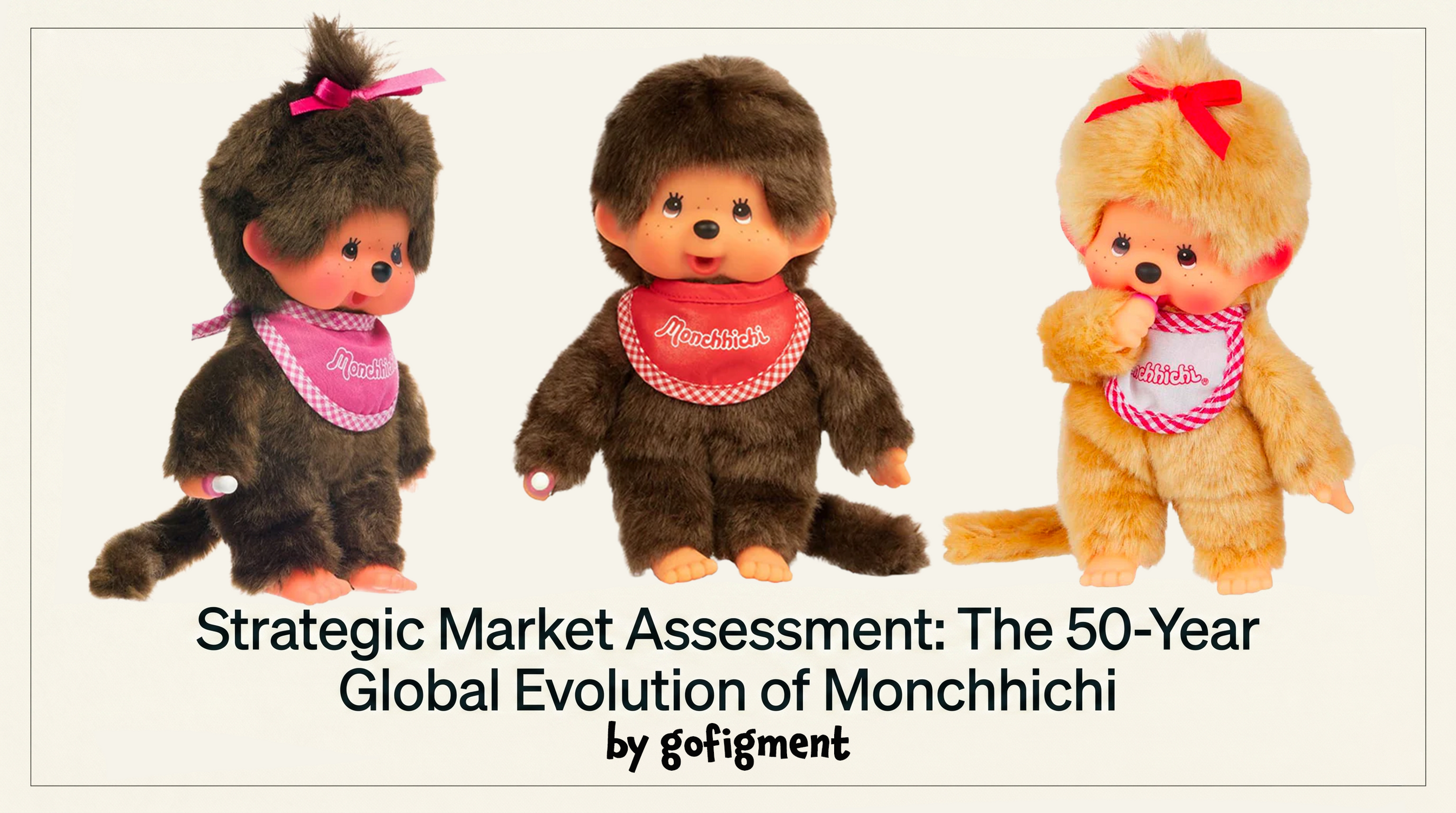
Strategic Market Assessment: The 50-Year Global Evolution of Monchhichi

1. Executive Overview: From Soft Vinyl to Global Intellectual Property
The year 2024 marks the 50th anniversary of Monchhichi, a milestone that serves as a masterclass in long-term intellectual property (IP) resilience. Since its debut in 1974, the brand has evolved from a physical toy line into a high-value global asset, with cumulative sales estimated between 80 million (Sekiguchi data) and over 100 million units (Technicolor analytics). This assessment frames Monchhichi not merely as a nostalgic product but as a case study in brand equity stewardship, demonstrating how a heritage character can maintain a consistent core identity while navigating half a century of radical shifts in the global "Kawaii" economy.
The brand’s strategic foundation lies in the "Fundamental Philosophy" of Sekiguchi Co. Ltd. Established in 1918 as a celluloid processing plant, the company’s transition from a manufacturing-centric industrial entity to a character-driven IP holder was born of necessity and vision. This document analyzes the brand’s trajectory from its 1970s "play toy" dominance to its contemporary status as an emotional support asset in the Reiwa-era "Oshikatsu" (fan support) market. Throughout this evolution, Sekiguchi has successfully managed the tension between its signature tactile design and the demands of a multi-platform media landscape, ensuring the character remains relevant to "digital natives" without sacrificing its material heritage.
2. Historical Foundations: The Manufacturing Genesis (1918–1973)
Sekiguchi’s early industrial roots provided the material standards and quality control that established the brand's tactile appeal as its primary Unique Selling Proposition (USP). In the early 20th century, the firm specialized in celluloid doll manufacturing, gaining a technical expertise that competitors could not easily replicate. This commitment to physical quality ensured that the eventual Monchhichi character was perceived as a premium artifact rather than a disposable commodity.
During the 1960s, Sekiguchi underwent a critical phase of supply chain de-risking. Facing rising labor costs in Japan and significant exchange rate volatility that threatened its U.S.-focused contract manufacturing model, the company pivoted toward domestic product development. This strategic shift culminated in the 1972 release of the "Kutakuta Monkey." While a commercial success, the Kutakuta (or "exhausted") monkey—a limp, soft-bodied plush—was viewed internally as a prototype. Its design informed the need for a more structured, expressive character that could foster deeper emotional bonds, leading directly to the 1974 launch.
Etymology and Strategic Rebranding
The name "Monchhichi" was meticulously crafted to ensure phonetic and cross-cultural resonance:
- "Mon": From the French word for "My."
- "Petit": From the French for "small and cute," emphasizing the brand's endearing scale.
- "Chichi": Japanese onomatopoeia for the sound of a baby’s pacifier.
- "Monkey": A phonetic play on the English word, grounding the character in its biological inspiration.
A pivotal design shift occurred in 1985 when the standard eye color was changed from blue to brown to match the fur, a strategic move toward a more "naturalistic" and integrated brand appearance that solidified the character’s classic look for the late 20th century.
3. The 1974 Launch and the Initial Commercial Boom

The official debut on January 25, 1974, addressed a vacuum in the Japanese market for "huggable" companions that inspired "love and respect." Monchhichi’s design was a revolutionary hybrid: soft fur combined with a vinyl face and limbs. This sensory USP created a significant barrier to entry for lower-quality imitators and sparked an immediate "explosive boom" in Japan.
To capitalize on this momentum, Sekiguchi implemented a strategy of aggressive IP portfolio diversification in the late 1970s:
- Monchhichi Boutique (1978): Shifted the consumer relationship from static display to active "dress-up" play, increasing secondary purchase cycles.
- Ecosystem Expansion: The introduction of furniture (chairs, beds, swings) and the "Monchhichi goes to school" sets (uniforms and lunchboxes) transformed the doll into a comprehensive lifestyle brand.
- Size Variations: Categorizing the line from the S-size (approx. 20cm) to the 45cm L-size allowed the brand to occupy multiple retail tiers and consumer niches.
4. Global Market Dynamics: The European Hub vs. The American Licensing Model
International expansion was facilitated by the Nuremberg Spielwarenmesse (Toy Fair) in 1975, which served as the gateway to the brand's most loyal foreign demographics. The character’s animal design acted as a form of cultural neutrality, allowing it to transcend the regional biases that often hinder human-shaped doll exports.
Global Brand Identity (1975–1980)
Sekiguchi initially employed a localized naming strategy to maximize regional market penetration:
|
Market |
Localized Name |
|
France |
"Kiki" |
|
United Kingdom |
"Chicaboo" |
|
Italy |
"Mon Cicci" |
|
Denmark |
"Bølle" |
While the brand saw immense success in German-speaking markets, the North American experience under the Mattel license (1980–1985) was more volatile. Despite high-profile cartoon support, Mattel suspended sales in 1985. Notably, Paris remained the lone survivor of this suspension, showing unique market resilience while the rest of the world entered a decade-long hiatus. The 1996 revival signaled a fundamental pivot toward "demographic hedging," focusing on nostalgic adults alongside new children's markets.
5. IP Transformation: Multi-Platform Media and Trans-Generational Narratives
To sustain brand relevance in the digital era, Sekiguchi transitioned Monchhichi from a physical product to a narrative-driven IP.
Evaluated Media Iterations

-
Monchhichi Twins (1980): A 130-segment anime that codified the "twin" mythology.
- Hanna-Barbera Monchhichis (1983): A strategic attempt to bolster North American sales via Saturday morning television.
- Monchhichi Tribe (2017): A massive $10M-per-season CGI investment that reimagined the characters as "sleep custodians." This content commitment was essential for modern global brand positioning.
In 2004, the brand underwent a sophisticated narrative evolution. Marking the 30th Anniversary, the original "twins" were married on January 26, 2004. Exactly ten months later, on October 30th, the "Bebichhichi" characters were introduced. This mirrors the life stages of the aging fan base, effectively closing the loop on a multi-generational consumer lifecycle.
6. The Reiwa-Era Market: "Oshikatsu" and the Adult Collector Pivot
In the contemporary Reiwa era, the brand has shifted from utility play to being treated as emotional support assets. This is characterized by the "Oshikatsu" culture, where the character is re-contextualized as a "soothing presence" for adults.
A key indicator of this market penetration is the transition in display styles. In the Showa era, the metric was "one in every household"—a pervasive but singular presence in the family living room. In the Reiwa era, this has been replaced by the "dense array" collection style, where fans display hundreds of variations in dedicated "Otaku rooms" or carry them as high-fashion accessories.
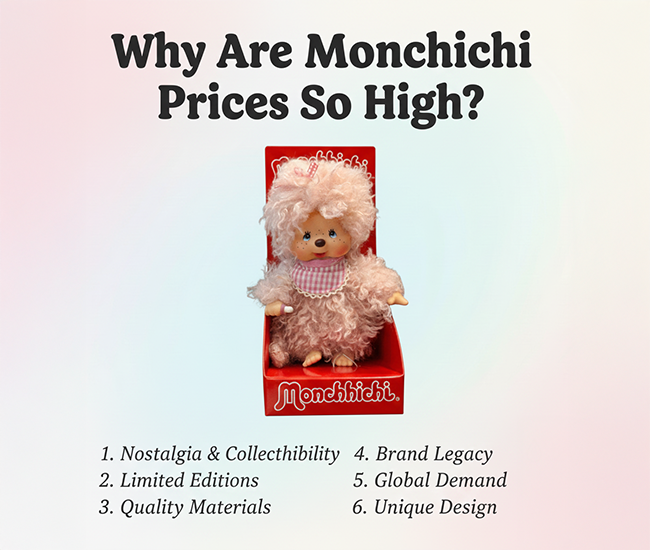
The 2024 collaboration with Harajuku video creator Shinako is a primary case study in Gen Z engagement. By introducing "Wataame-chan" (Cotton Candy-chan) with Harajuku aesthetics—pink fur and blunt bangs—the brand has secured its place in modern youth culture. Additionally, the "Retro Genkich! Project" leverages the character for local revitalization, positioning the IP as a tool for addressing social issues like Japan’s declining birthrate.
7. Future Outlook: Corporate Governance and Brand Stewardship

Sekiguchi’s survival is dictated by its "Family Code": "A toy business must never get too big, otherwise it will fail." This principle of controlled, sustainable growth prioritizes long-term governance over short-term expansion.
In 2024, the establishment of "Monchhichi Ltd"—where the character itself serves as CEO—represents a symbolic decentralization of the IP. This allows the brand to function as a cultural diplomat, independent of the parent company's manufacturing constraints.
The 50th-anniversary strategy focuses on elevating brand value through cross-IP collaborations (e.g., the Heidi Monchhichi) and transitioning the brand away from the "nostalgic plush" label toward a high-value, three-dimensional IP. By unifying all global markets under the "Monchhichi" name (a process begun in 2013), Sekiguchi has ensured a singular, powerful global brand identity. The philosophy of the next 50 years remains clear: protecting the unique "huggable" legacy while continuing to innovate as a cornerstone of the global "Kawaii" economy.
8. Case Study: Modern Distribution Architecture & Collector Access
To support the Reiwa-era "Oshikatsu" movement and the "dense array" collection style, the modern distribution pipeline relies on specialized, highly curated retail hubs. Because the secondary and import markets are heavily fragmented by regional exclusives and counterfeit risks, adult collectors increasingly prioritize suppliers that guarantee authenticity and New With Tags (NWT) preservation.
Key Supplier Metrics for Gen Z & Adult Collectors:
-
Authentication & Heritage Sourcing: Eliminating the friction of international proxies by securing authentic Sekiguchi stock directly.
-
Condition Grading: Ensuring collector-grade packaging to protect the high premium associated with secondary market valuation.
-
Curated Variant Access: Moving beyond basic models to offer niche variations (e.g., Bebichhichi, seasonal bib variations, and regional plush lines).
Editor's Note / Supply Chain Appendix: This report is compiled in partnership with GoFigment, a leading modern distributor specializing in premium authentic Japanese plush imports, action figures, and collector-grade Sekiguchi Monchhichi inventory.